Originally posted on the Bartitsu.org site on Saturday, 30th June 2012
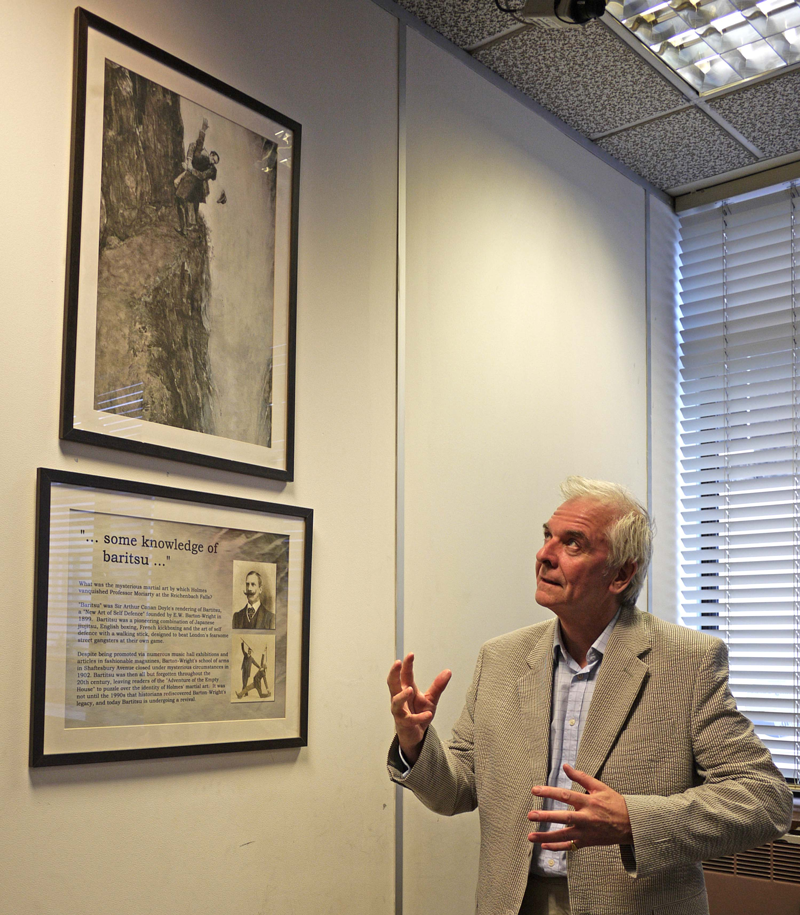
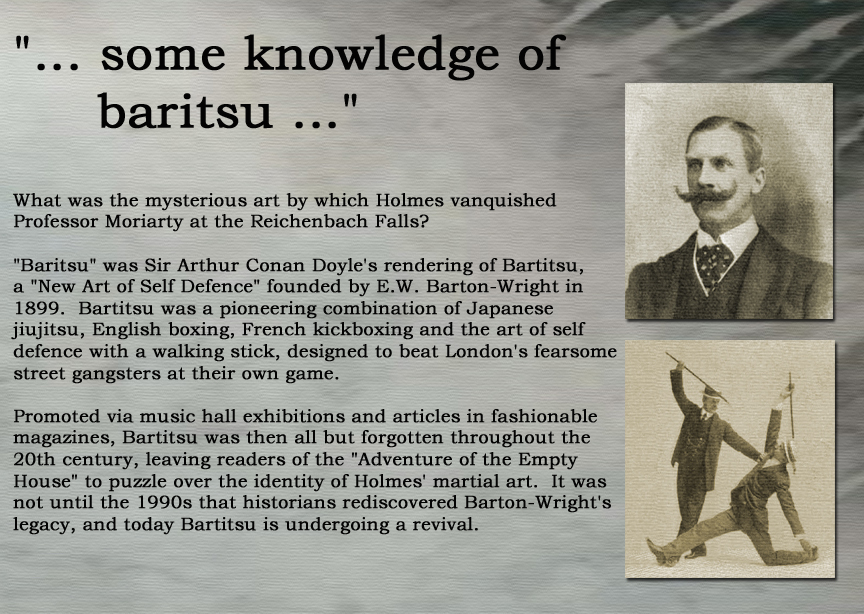
On Thursday, June 28th, 2012 a wall display commemorating Bartitsu founder E.W. Barton-Wright was unveiled as part of the Sherlock Holmes Collection at Marylebone Library in London. The display consists of a large framed print of Sidney Paget’s illustration of Sherlock Holmes’ “baritsu” struggle with Professor Moriarty, and a companion print offering a summary of Barton-Wright’s Bartitsu and its connection with the Holmes canon. The display was designed by Tony Wolf and was donated to the Collection on behalf of the Bartitsu Society, towards the mission of memorialising Barton-Wright’s life and achievements.
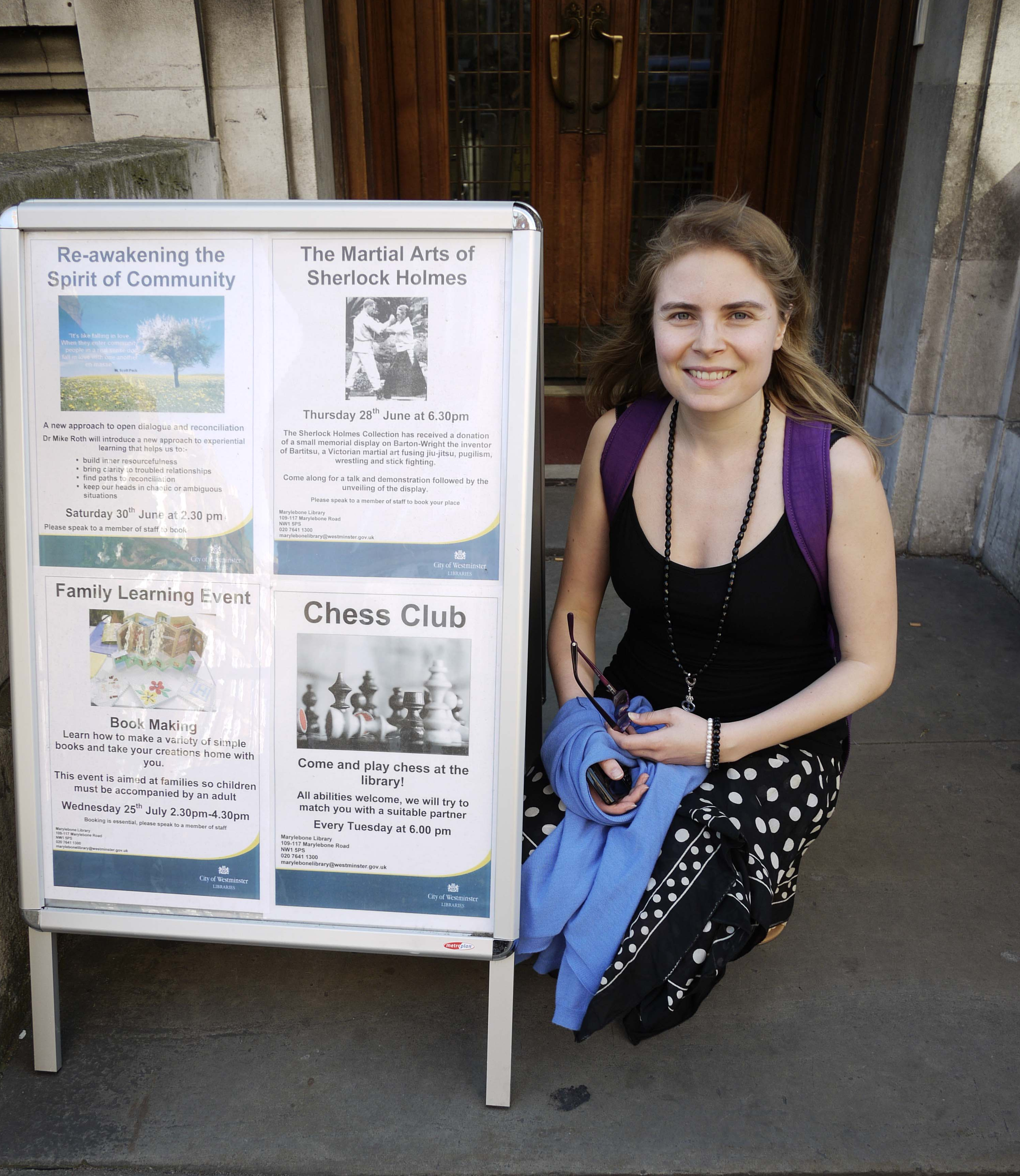
Above: Emelyne Godfrey, author of the book Masculinity, Crime and Self Defence in Victorian Literature outside Marylebone Library.
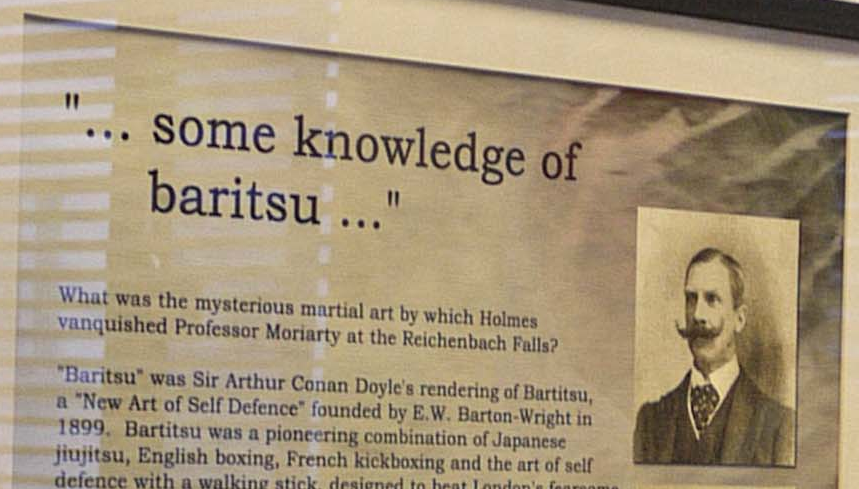
Above: David Jones of the Sherlock Holmes Society strikes a pose inspired by Paget’s famous illustration. The text reads:
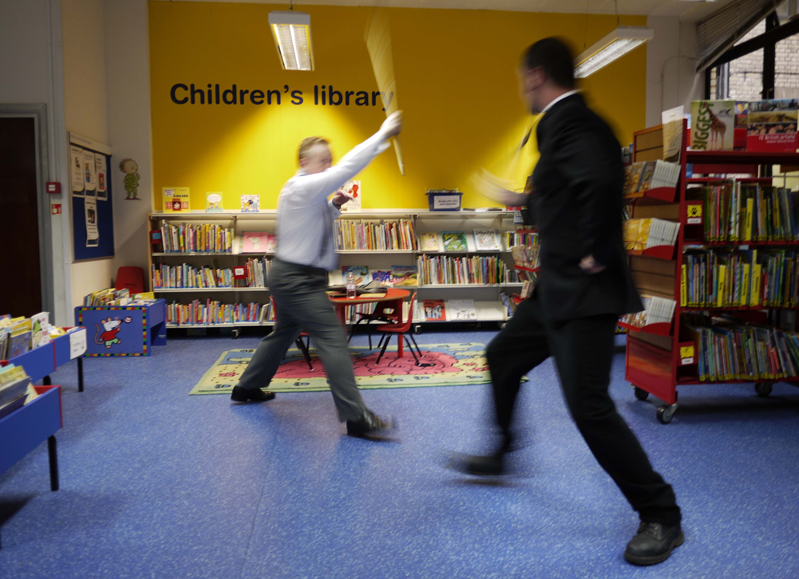
Above: Bartitsu instructors James Marwood (left) and George Stokoe demonstrate the Bartitsu method of self defence with a walking stick as part of Mr. Marwood’s lecture/demonstration in connection with the unveiling.
This short article from the Motherwell Times of July 27th, 1928 remarks upon a visit to London by Herbert Gordon Lang, who perpetuated and modified the Vigny method of stick fighting.
There is in London at present a slightly-built man who would not feel very alarmed if he suddenly saw three burly hooligans rushing at him with knives in their hands.
His light malacca cane would whistle through the air three or four times. There would be cries of pain, and his assailants would be incapacitated.
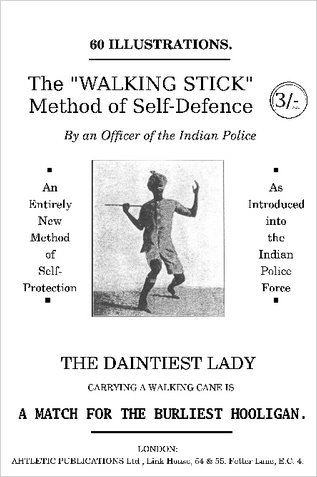
This man, who can walk about the world with so much confidence, is Mr. H. G Lang, a district superintendant of police in the Bombay Presidency, India. He has recently introduced into the Indian police force a method of self-defence with a light walking-stick, believed to be of Continental origin, which has been found very effective.
Mr. Lang told a reporter that by this method a young girl could disable a powerful man with even a short umbrella. He said: – All that you need know is the vulnerable parts of a person’s body, and the means of delivering the blow. A sharp, slashing blow on the side of a man’s neck may easily kill him. A rap on his hand will make it useless. A mild blow on the inner side of the knee has made it impossible for a man to walk properly for months.
The ordinary untrained person defending himself with a walking-stick would strike down on his assailant’s head or shoulders. This is a “dead” blow which cannot be quickly repeated, while the stick can easily be caught by the other person. Glancing cuts to the side of a man’s neck can be delivered with lightning rapidity, and the stick cannot be caught. Even a man about to fire a revolver from close range could be diabled with a slash to the hand or the face.
I have found that my knowledge of this method of self-defence has given me the feeling of the greatest confidence. On one occasion in India I saw a powerful built lunatic coming toward me. I did not feel alarmed and decided just where to strike. As it happened, he did not actually attack me.
Mr. Lang has written a fascinating book describing the different strokes and guards. In this reference is made to the “Riot Enclosure” in which the Indian police are trained to deal with mobs. It consists of circular arrangement of posts with sacks and boards irregularly placed to represent a mob.
Delayed several times due to the pandemic, The King’s Man – a prequel to the popular Kingsman series – is currently set for release in December of 2021. As this trailer demonstrates, alongside copious sword, knife and gun-play, the suave Duke of Oxford (Ralph Fiennes) is adept at close-combat with both umbrellas and crook-handled walking sticks.
The “Suffrajitsu” scene from the recently rediscovered 1911 movie Charley Smiler Takes Up Ju-jitsuhas been edited into the 2018 documentary No Man Shall Protect Us, which illuminates the role of the secret society of martial arts-trained female bodyguards who defended the leaders of the radical suffragette movement.
The documentary also includes a short section on Bartitsu as well as interview-style re-enactments with suffragette jujutsu trainer Edith Garrud, played by actress Lynne Baker.
The prolific Tommy Joe Moore offers a concise lesson in basic academic boxing, in an aggregative style that represents the baseline of gentlemanly fisticuffs circa 1900.
In order to ensure, as far as it is possible, immunity against injury in cowardly attacks or quarrels, one must understand boxing in order to thoroughly appreciate the danger and rapidity of a well-directed blow, and the particular parts of the body which are scientifically attacked. The same, of course, applies to the use of the foot or the stick.
He continued:
Ju-do and Ju-jitsu were not designed as primary means of attack and defence against a boxer or a man who kicks you, but are only supposed to be used after coming to close quarters, and in order to get to close quarters it is absolutely necessary to understand boxing and the use of the foot.