Bartitsu Shout-Out in New Superhero Drama, “The Cape”

  • Originally published on the Bartitsu.org site on Thursday, 20th May 2010

Bartitsu gets an unexpected shout-out in this preview for the new NBC superhero series, “The Cape”. From the official Cape website:

“The Cape” is a one-hour drama series starring David Lyons (“ER”) as Vince Faraday, an honest cop on a corrupt police force, who finds himself framed for a series of murders and presumed dead. He is forced into hiding, leaving behind his wife, Dana (Jennifer Ferrin, “Life on Mars”) and son, Trip (Ryan Wynott, “Flash Forward”). Fueled by a desire to reunite with his family and to battle the criminal forces that have overtaken Palm City, Faraday becomes “The Cape” his son’s favorite comic book superhero — and takes the law into his own hands.

During a training montage, the Cape’s mentor, Max Malini, says:

“British Bartitsu … the warrior dancers of the T’ang Dynasty used their robes as weapons.”

The Cape is obviously an expert martial artist armed with a super-powered cloak, but it’s unlikely that we’ll see any classical Bartitsu featured in the series. On the other hand, it’s always nice when writers do their homework. One wonders what E.W. Barton-Wright would have made of all this.

Posted in Fiction, Pop-culture, Video | Comments Off on Bartitsu Shout-Out in New Superhero Drama, “The Cape”

Baron Charles de Berenger’s “Defensive Gymnastics” (1838)

  • Originally published on the Bartitsu.org site on Wednesday, 12th May 2010

“To be courageous is enviable, whilst, on the other hand, to be able to conceal the absence of courage is useful” – Baron Charles de Berenger, 1835

Seven decades before E.W. Barton-Wright produced his articles on Bartitsu, there was Baron Charles de Berenger and his “Defensive Gymnastics”.

Lieutenant Colonel Charles Random, Baron de Berenger, was a colourful character indeed. Virtually nothing is known of his early life, except that he was born with the humbler name of Charles Random sometime in the late 18th Century.

During the first decade of the 1800s he was reported to have been working as a colourer at Ackermann’s Printing Company in London and to have been serving as an Army volunteer. He was a notably good shot with both rifle and pistol. As a well-mannered young sportsman he enjoyed the patronage of a banker named Hammerley, and it was at Mr. Hammerley’s home that Random met and subsequently married a German widow, the Baroness de Berenger. He would probably have been aged in his late twenties at that time.

By virtue of having married a Baroness, it appears that Random then assumed the title of Baron and for the rest of his life announced himself as “Charles Random de Berenger de Beaufain” and claimed to be of noble Prussian heritage.

By all reports an effusively polite and remarkably inventive man, de Berenger was none-the-less prone to financial problems. While the Napoleonic Wars raged throughout the European mainland, de Berenger landed in a London debtor’s jail on at least one occasion. In 1814 he was implicated in an audacious and elaborate stock fraud that included temporarily convincing a large proportion of London society that Napoleon Bonaparte had been killed. De Berenger served a year in prison for his part in that infamous affair.

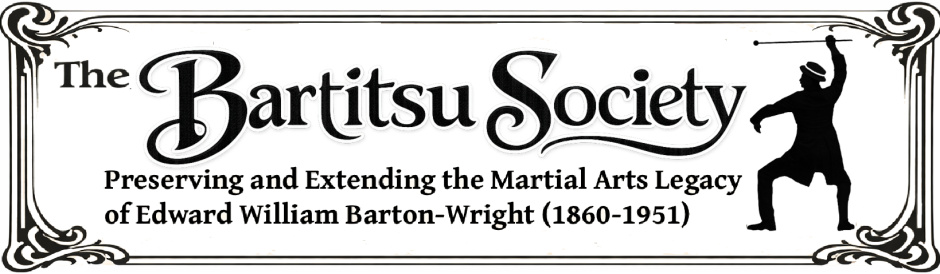
The Stadium

By 1830 de Berenger appears to have come into a very substantial sum of money, enough to purchase a large estate in the London suburb of Chelsea.

At the time de Berenger bought the property it was a fine estate including a large villa and some eleven acres of picturesque park-land bordering the river Thames. Perhaps in consequence of his interests in marksmanship and athletics, he immediately began work on converting the oak and elm-studded grounds of Cremorne House into an elaborate outdoor training facility for all manner of sports. He installed butts (targets) for archery, pistol and rifle shooting, set aside fields for equestrian training and planned a “floating school of Natation (swimming),” to be set upon pontoons and moored to his pier.

On May 28th, 1831 the Baron issued a prospectus for “THE STADIUM, Cremorne House, Chelsea, established for the tuition and practice of skilful and manly exercises generally.” The Stadium’s motto was “Volenti nihil difficile,” “Nothing is difficult for him who has the will.”

This prospectus and one subsequent were notable for including pictures by both de Berenger himself and his friend, the famous caricaturist and illustrator George Cruikshank.

“How to Protect Life and Property”

In 1835, de Berenger released his second book, “Helps and Hints: How to Protect Life and Property.” His format and style may have been modeled after that of Lord Chesterfield, whose correspondence with his son Philip (dating from 1730) had since been compiled into a popular and controversial volume. In any case, de Berenger chose to frame “How to Protect Life and Property” as a series of letters to his own son, Augustus, advising him on how to prevent or otherwise counter a myriad of potential threats.

Thus, de Berenger’s work may actually be considered as an early ancestor of the modern “self-protection handbook” genre. De Berenger did not simply present a system of, for example, fencing, nor boxing; rather, his lessons addressed self-defence in the broadest sense, including everything from escaping a burning house to numerous tricks of hand to hand combat; from dealing with wild animals to the avoiding the depredations of swindlers and pickpockets, with numerous digressions on the subjects of manly courage and morality.

The book was well-received by most contemporary reviewers, although it was dismissed out of hand by a much later (and deeply unsympathetic) writer as being a “claptrap book of gymnastics.” Several journals noted the Baron’s apparent obsession with moral conduct, which was cast in a rather ironic light by his involvement in the Stock Exchange scandal, but most seem to have taken his unusually florid prose style with amused good grace and to have been genuinely impressed with the scope and detail of his instruction and anecdotes.

In 2008, de Berenger’s writings on self-protection were re-published as “Defensive Gymnastics”, a compilation of the Baron’s advice on the different modes of “manly character”; the use of defensive gymnastics with fists, canes, whips, pistols and umbrellas to thwart pickpockets, street ruffians and con-artists; and how to escape from highwaymen, burning buildings, icy ponds and wild bulls.

The 2008 edition features over 50 new photographs and drawings, an introductory biography and a special feature on the Baron’s Stadium. Here is a short video preview:

Posted in Antagonistics, Biography, Video | Comments Off on Baron Charles de Berenger’s “Defensive Gymnastics” (1838)

“More Jiujitsu Tricks” (Punch Magazine, 1905)

  • Originally published on the Bartitsu.org site on Wednesday, 5th May 2010

During the first “jiujitsu boom” of the early 20th century, Punch Magazine made great sport of the novel art of self defence and of the claims made by jiujitsu enthusiasts.

In April of 1899 Mr. Punch published a story purporting to recount what happened when a Bartitsu fan, whose interests only extended to reading Barton-Wright’s articles rather than actually practicing the art, attempted to use it against a burglar. That tongue-in-cheek essay is reproduced in the second volume of the Bartitsu Compendium.

The June 14, 1905 edition of Punch included the following article, written by “Iyama Terra”, describing several “laughably simple” tricks sure to upend any scallywag.

MORE JIU-JITSU TRICKS.

Iyama Terra, the famous Japanese wrestler, whose recent work on Jiu-Jitsu (The Bruiseless Art) has created such a sensation in police circles, has been good enough to supply us with three short chapters which were inadvertently omitted from his book. His valued contribution is accompanied by the following characteristic note :—

Dear Mr. Punch,—Jiu-Jitsu, as taught by me and practised by everybody, is the science of defending yourself against every known form of physical attack. The system embraces 417 separate tricks, all of which can be done. In fact, next to its infallibility, the most conspicuous virtue of Jiu-Jitsu is its almost laughable simplicity. Yours, Iyama Terra.

RUSES AND FALLS.

To Repel The Attack Of A Man With Hatchet.

It is very important to know how to deal with a man who assails you with a hatchet. There are several ways of making effective resistance, but just a few will suffice. Indeed, it will be better to teach you only two or three, because if you knew them all you would, when putting them into practice, get confused and probably chopped.

Method 1.—Wait until your opponent strikes and then move. Try to move as quickly as possible. Everything depends on that. Activity rather than gracefulness should be aimed at. If your adversary delivers a really violent blow, and you successfully evade it, his hatchet will be partly buried in the ground. While he is endeavouring to extricate it approach him from behind, seize his legs and plait them in the shape of an ordinary lock-stitch. Then firmly bend them up his back and maintain them in their place with your right arm. Your left hand will be free to secure his left arm and wrap it twice neatly round his neck. To complete the fall you can stand on his right hand, if necessary. He is now practically powerless, and you can hold him in position until he has given a promise to lead a better life.

Method 2.—This is a favourite trick of mine. For its successful performance it is desirable that your friend should be wearing a fur overcoat, a stand-up collar and knickerbockers. Your first business is to make a feint, after which you ought to have no difficulty in taking the hatchet from him. Roll his fur overcoat suddenly up over his head to prevent him from seeing what you are going to do next. Get a firm purchase on his collar from the back, and with the other hand clutch the ends of his knickers. Tilt him over quickly and swing him about with his face downwards. As to how long you need swing him there is no absolute rule. Deal with every case on its merits.

Method 3.- —In the event of your antagonist being a big man with a big hatchet, and especially if it is quite clear that he is annoyed, it is sometimes a good thing to go swiftly away. Return with several friends and bigger hatchets.

To Cope With A Hat-kicking Hooligan.

To a quiet, well-behaved man nothing is more vexing than to have his hat, tilted over his eyes by the frolicking foot of a hooligan. I have squelched scores of hat-doffers in my time. This is how it is done.

Method 1.—Let him try it on. When his foot is about two inches off the hat strike it (the foot) smartly to one side. This will cause him to whirl on one leg like a top. When the projecting limb comes round again, take hold of it and follow it round in the manner of a sailor at the capstan. Four or five turns and you can leave him spinning.

Method 2.—This is usefully employed when your assailant happens to be intoxicated. In such case his kicking is likely to be erratic and may miss your hat. Seize his foot when it is about opposite your waistband. Keeping tight hold of the foot run rapidly past him. This will probably cause his leg to bend at the knee. To double up his remaining leg and tipple him on to his back is the work of a moment, or a couple of moments at the outside. Then tie each leg to its corresponding arm in a loose bow-knot. If you have the time it is amusing to stand by and watch him. As he attempts to undo himself, tighten the knots.

N.B.—As this second method requires a quick eye and plenty of nerve, it is well to constantly practise it at home before trying it on a stranger.

“Eifia Nofo” replied with two further techniques in the July 5, 1905 edition:

MORE JIU-JITSU TRICKS.

Dear Mr. Punch,—After reading in your columns Iyama Terra’s additional chapters on Jiu-Jitsu, I am tempted to give the public the advantage of two of my favourite tricks which I have practised many years with unvarying success.

(1) To protect yourself from a man who presents a loaded revolver full in your face.

At first sight it would appear that the man with the revolver has the advantage over you, but a close study of my method of defence will convince anybody that the man is really completely in your power.

First, with an adroit movement, catch the muzzle of the revolver firmly between your teeth. Then with a quick step towards your opponent get out your matches. Strike one, and set fire to his hair. He will of course put his hands up to extinguish the flames, and so let go of the revolver. He is now at your mercy, and you can do as you like with him.

(2) To protect yourself from a man who aims a blow at your face with his clenched fist.

For the purposes of this trick it is essential that you should be wearing heavy boots. In the event of a quarrel on the football field you will naturally be forearmed, but should you and your opponent be playing tennis you must tactfully postpone the attack until you have changed your shoes.

The method of defence is very simple. As he hits out at your face, and before he reaches it, quickly stand on your head. He will obviously hit your hobnailed boots, and his fist will suffer. His next step will naturally be to stand on his head and renew the attack, when you immediately resume your former position and he again hits your boots. This must be continued until your opponent is tired.

—Yours, Eifia Nofo.
Posted in Edwardiana, Humour, Jiujitsu | Comments Off on “More Jiujitsu Tricks” (Punch Magazine, 1905)

Bartitsu at ISMAC 2010

  • Originally published on the Bartitsu.org site on Sunday, 2nd May 2010

Tony Wolf will be teaching a six-hour Bartitsu seminar at this year’s International Swordfighting and Martial Arts Convention in Detroit, Michigan (September 3-6 2010).

This class will explore three essential combat principles of Bartitsu, the “gentlemanly art of self defence” founded by Edward William Barton-Wright in 1898. Barton-Wright defined these principles as:

(1) to disturb the equilibrium of your assailant; (2) to surprise him before he has time to regain his balance and use his strength; (3) if necessary to subject the joints of any part of his body … to strains which they are anatomically and mechanically unable to resist.

He also noted that:

It is quite unnecessary to try and get your opponent in any particular position, as the system embraces every possible eventuality, and your defence and counter attack must be entirely based upon the tactics of your opponent.

Drawing from a selection of classical Bartitsu unarmed and walking-stick fighting set-plays, we will take up the challenge implied by Barton-Wright’s precepts of adaptability and improvisation, thereby continuing the “mixed martial arts” experiment that he began in late Victorian London.

Pre-requisites: this class is not suitable for beginners. Intermediate to advanced level martial arts training, preferably including skill in falling techniques, is required.

Equipment: a sturdy crook-handled walking stick or 36 inch dowel with any edges smoothed away; fencing mask or similar face/head protection.

Posted in Canonical Bartitsu, Seminars | Comments Off on Bartitsu at ISMAC 2010

E.W. Barton-Wright’s “overcoat trick”

  • Originally published on the Bartitsu.org site on Tuesday, 27th April 2010

In the March edition of Pearson’s Magazine, 1899, Bartitsu founder E.W. Barton-Wright demonstrated a curious self defence technique making use of an overcoat as a defensive weapon. The provenance of this technique is unclear. It could be an aspect of the Shinden Fudo Ryu jiujitsu that he had studied in Kobe, Japan; an adaptation of a French Apache (gangster) street-fighting trick, or perhaps Barton-Wright’s revival/update of the classic “cloak in the face” manoeuvre recorded by historical fencing masters such as Salvator Fabris:

Fabris’ technique had been revived as part of the historical fencing curriculum developed by Captain Alfred Hutton, who taught both Elizabethan and modern forms of fencing, as well as theatrical stage combat, at Barton-Wright’s Bartitsu Club:

According to Barton-Wright:

There is, however, one simple and effective way of meeting an attack with a knife that I will explain. We will suppose that you have to pass through a locality late at night where there is a likelihood of such an attack, and you do not wish to run the risk of bringing yourself within the law by relying upon a revolver.

Carry your overcoat upon your shoulders without passing your arms through the sleeves, in the style of a military cloak, with your right hand ready upon your left shoulder to use your coat in the way explained below, should the necessity arise. Be careful always to walk in the middle of the road. Directly your assailant attacks, face him and wait until he is within a distance of two or three yards. Then envelop his head and arms by throwing your coat at him, with a sweeping, circular motion of the arm. This will obscure his view momentarily, but not your own, and will give you plenty of time to deliver your attack, which should take the form of a right-handed knock-out blow in the pit of the stomach.

Or while he is still enveloped in the folds of your coat, slip round behind him, seize him by the right ankle, and push him under the shoulder blade with your left hand. You will thus throw him very violently upon his face, and in his endeavour to break his fall and protect his face he will put out his hands, and in doing so, involuntarily drop his weapon. He will then be disarmed and in a position where you can break his leg immediately if you so like, or if you do not wish to proceed to such extremes, you can hold him down in the position shown in No. 6 until the police arrive.

This is only one of the many ways I have of meeting such a contingency.

A tongue-in-cheek reference to the overcoat technique then appeared in the April 8th, 1899 issue of Guy’s Hospital Gazette:

Mr. Higgins has been taking lessons in the new art of self-defence. At his first meeting with Mr. Barton-Wright he attempted to floor him with the usual knock-out blow, but soon found himself presenting an inverted image moving against the shadow. This led him to think that there was more in the method than met the eye.

It appears that there is a good deal to learn in this new art. There are several hundreds of different manoeuvres for as many different forms of attack, and the trouble begins, I imagine, when you work off the wrong defence for the particular variety of attack.

There is one trick with an overcoat which strikes us as particularly “fresh.” All you have to do is to walk in the middle of the road with your arms removed from the sleeves of your overcoat. (The only drawback to this is that it rather spoils the set of the overcoat and necessitates wearing one all the summer). Then you meet your assailant—this is the hardest part of the business, but it can generally be managed by a judicious use of opprobrious epithet. Having met him, all you have to do is to seize your coat by the shoulder and plug it round his head.

If you are successful you can jump on his chest while he is getting untangled; if not, he will probably move off with the overcoat down a side-street. You lose the overcoat, but win the game. I must try it on a policeman.

And finally, here is the same trick, executed by Jude Law as Dr. John Watson in Sherlock Holmes (2010) as a prelude to belabouring his antagonist with a frying pan:

Posted in Canonical Bartitsu, E. W. Barton-Wright, Instruction | Comments Off on E.W. Barton-Wright’s “overcoat trick”

Another “new” canonical Bartitsu technique

  • Originally published on the Bartitsu.org site on Sunday, 25th April 2010

From Percy Longhurst’s “JiuJitsu and Other Methods of Self Defence”, 1906 (pp 77-78):

A different defence to a similar attack – one which considerably surprised me when I was first introduced to it by Mr. Barton-Wright several years ago, and which is by no means too much for feminine strength – is that illustrated in Figure 46. The descending hand of the assailant is jerked up, his wrist seized, and the defender simultaneously steps outside the assailant’s advanced leg so that her knee – the leg being bent – is pressed against his bent knee. A sideways and downwards jerk of the captured hand will lay the assaulter on the ground, the whole secret of the move being, of course, the disturbance of the balance.

Considerable confidence and great quickness are required for the satisfactory accomplishment of this throw, and, admittedly, there are better defences which may be used if the assailant has a very great superiority of weight. If the thrower makes a slight backwards kick with her advanced foot at the same moment that she jerks the captured arm round, it will facilitate her assailant’s downfall.

Posted in Canonical Bartitsu, Instruction, Jiujitsu | Comments Off on Another “new” canonical Bartitsu technique

“A Few Practical Hints on Self Defence” (1900)

  • Originally published on the Bartitsu.org site on Friday, 23rd April 2010

A longtime wrestling, boxing and general “antagonistics” enthusiast, Percy Longhurst’s precise connection with Bartitsu is a matter of some speculation.

He was among the audience at some of E.W Barton-Wright’s early self defence exhibitions in London (1898-99) and actually volunteered to try his considerable wrestling skill against one of the newly-arrived Japanese jiujitsuka; by his own account, Longhurst put up a game defence but was quickly defeated, apparently with some sort of arm-lock. Circumstantial evidence suggests that he was likely among the original members of Barton-Wright’s Bartitsu Club, as he later credited a particular throwing technique to Barton-Wright; he was definitely a student of Yukio Tani’s and Sadakazu Uyenishi’s, but the chronology is not clear.

Longhurst was a prolific writer on all manner of athletic topics. His commentaries on, for example, the disadvantage of European wrestlers being required to fight under Barton-Wright’s submission grappling rules during the latter’s music hall challenge performances, and his balanced and realistic take on the “boxing vs. jiujitsu” controversy of 1906-7, reveal a canny and pragmatic approach to personal combat. Longhurst’s book “Jiu-Jitsu and Other Methods of Self Defence“, likewise, offered a very Bartitsu-like combination of wrestling, jiujitsu, boxing, kicking and stick fighting techniques, and is, in fact, the closest thing to a “Bartitsu manual” to have come out of England in the early 20th century.

Longhurst’s article “A Few Practical Hints on Self Defence” (reproduced below) was originally published in Sandow’s Magazine of Physical Culture between January and June of 1900. It presages “Jiujitsu and Other Methods of Self Defence” in several ways and is also notable for including a veiled reference to the Afro-Brazilian martial art of capoeira (!)

Click on the images below to see them in full size.

Along with his colleagues William Garrud, W. Bruce Sutherland and Percy Bickerdike, Longhurst later became a founding member of the British Jiujitsu Society, and he continued to write on judo, jiujitsu and self defence topics throughout the early-mid 20th century.

Posted in Antagonistics, Canonical Bartitsu | Comments Off on “A Few Practical Hints on Self Defence” (1900)

Sadakazu Uyenishi in Action (1905)

  • Originally published on the Bartitsu.org site on Wednesday, 21st April 2010

From an article in the Illustrated London News of March 1905; former Bartitsu Club instructor Sadakazu Uyenishi demonstrating jiujitsu restraint holds and throws for members of the Aldershot Military School’s Physical Training Corps.

Posted in Jiujitsu | Comments Off on Sadakazu Uyenishi in Action (1905)

Bartitsu exhibition at Starfest

  • Originally published on the Bartitsu.org site on Wednesday, 21st April 2010

A snapshot from a lighthearted Bartitsu display by the Victorian Antagonistics League at the recent Starfest pop-culture/entertainment convention in Denver, Colorado:

“Belabour Him As You See Fit”: Steampunk Self-Defense”

Chastise blackguards! Repel ruffians! When your steam-powered radium gun fails you, upon what must you rely? Why, Bartitsu, of course — the only mixed-martial art of the Steampunk era. Employ walking stick, umbrella, and scientific boxing skills, blended with jiu-jutsu from the mysterious East, and savate from the less-fashionable quarters of Paris. With suitably bold maneuvers you might buy yourself time for the airship to arrive and spirit you and your companions to safety.

Posted in Exhibitions, Pop-culture | Comments Off on Bartitsu exhibition at Starfest

Eugene, Oregon Seminar Video

  • Originally published on the Bartitsu.org site on Monday, 19th April 2010

Footage from the Bartitsu seminar that took place at the NorthWest Fencing Academy in Eugene, Oregon on March 13-14, 2010.

The Eugene seminar included training in both the “canonical” or classical set-plays of the art and also in neo-Bartitsu drills, which are used as a transition between the set-plays and free-sparring. In these neo-Bartitsu exercises, the “opponent” can spontaneously resist or counter the “defender’s” scripted techniques and the defender is challenged to improvise to regain to control of the fight.

The focus in this seminar was on Bartitsu as a recreational martial art, rather than purely as self defence.

Partnering instructor Tony Wolf are David Borland, Provost d’armi (classical Italian fencing) in the black shirt, Matthew Lowes, aikido shodan and certified Systema instructor in the grey shirt and Maestro Sean Hayes (classical Italian fencing) in the white shirt.

Posted in Canonical Bartitsu, Seminars, Video | Comments Off on Eugene, Oregon Seminar Video