Originally published on the Bartitsu.org site on Monday, 24th July 2017
London’s Radical Tea Towel Company will be hosting a day-long Suffrajitsu Experience on Sept. 16, with a guided tour by historian Elizabeth Crawford, a lecture by Dr. Emelyne Godfrey and a demonstration of suffragette martial arts by Jennifer Garside.
Originally published on the Bartitsu.org site on Monday, 24th July 2017
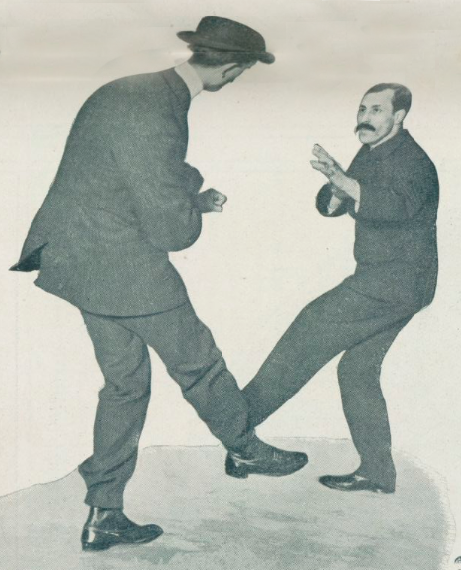
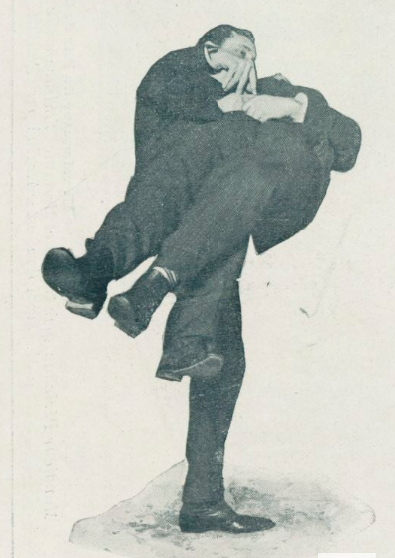
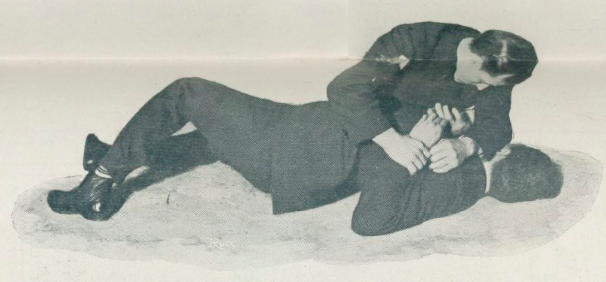
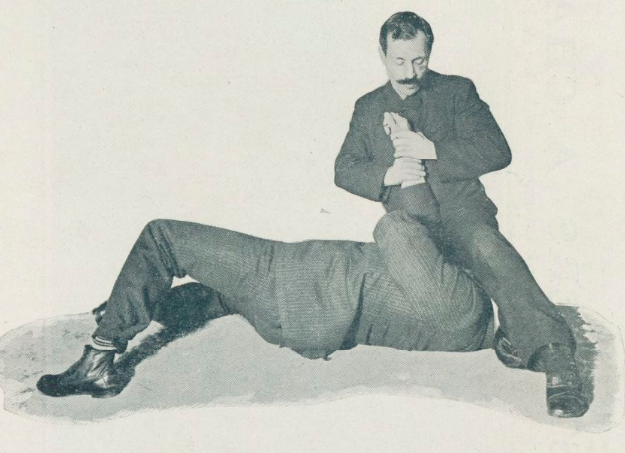
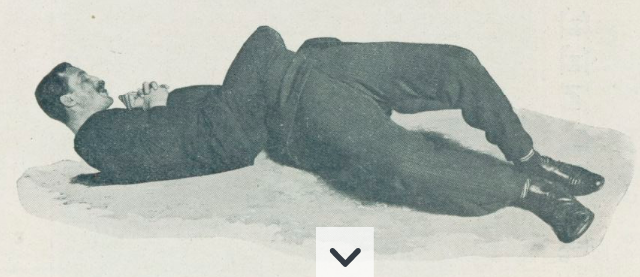
In the wake of his stunning six-second victory against savateur Georges Dubois in their 1905 style-vs-style challenge fight, jiujitsuka Ernest Regnier (a.k.a. “Re-Nie”) posed for the following series of technical photographs. The pictures are from the November 3, 1905 edition of La Vie au grand air: revue illustrée de tous les sports and the descriptive text is translated from L’Illustration of November 4th, 1905.
Dubois feinted a low kick with his right leg, which Re-Nie dodged. Dubois then executed a side kick with the same leg, but at the same time, with extraordinary agility, Re-Nie performed a cat-like leap towards Dubois and grabbed him round the waist.
Dubois tried a hip check: Re-Nie, moving to the right of his opponent, placed his right hand on the abdomen of the latter, simultaneously compressing the lumbar muscles with the left hand and swinging a knee to Dubois’ right thigh.
Dubois reeled and fell back onto his shoulders; nevertheless Re-Nie stayed in contact, taking a grip that allowed him to seize Dubois’ right wrist.
Re-Nie immediately dropped onto his back, to the left of Dubois, passing his left leg across Dubois’ throat; Re-Nie was now gripping Dubois’ forearm with both hands, Dubois’ arm passing between his two legs.
Note the discrepancy here; if Re-Nie was gripping Dubois’ right wrist, then he must in fact have dropped to Dubois’ right, as illustrated in the photograph, rather than to his left.
A strong pressure exerted upon the wrist of Dubois threatened to dislocate his arm at the elbow, which was now cantilevered. Dubois resisted for a second, then cried for mercy.
Interestingly, some observers – completely unfamiliar with jiujitsu techniques – believed that Re-Nie had won by choking Dubois with a leg scissor lock around his neck, rather than via the extended arm-lock. The arm-lock was also a favourite submission technique of Re-Nie’s jiujitsu instructor, former Bartitsu Club trainer Yukio Tani.
Posted inJiujitsu, Savate|Comments Off on How “Re-Nie’s” Jiujitsu Won Against Dubois’ Savate (1905)
Originally published on the Bartitsu.org site on Friday, 28th July 2017
A selection of cane and umbrella self-defence techniques originally published in La Vie au grand air : revue illustrée de tous les sports of February 9, 1906. The demonstrator is Professor Chabrier of Paris.
Posted inAntagonistics|Comments Off on Professor Chabrier’s Cane and Umbrella Defence
Originally published on the Bartitsu.org site on Friday, 28th July 2017
In 1902, Bartitsu Club member Captain F.C. Laing wrote an article titled The ‘Bartitsu’ Method of Self-Defence for the Journal of the United Service Institution.Captain Laing’s sequence of set-plays such as “Attacked by a man with a stick in his hand” and “A man without a stick rushes at you with his fist” offers a unique canonical supplement to E.W. Barton-Wright’s Self-Defence with a Walking Stick (1901) and also includes some basic technical drills which B-W did not record. Laing’s article is reproduced in full in the second volume of the Bartitsu Compendium (2008).
Although Captain Laing produced some simple sketch illustrations of basic techniques, most of his sets were only described in a few lines of text. The following is the first of a series of interpretations of Laing’s “Practices”, illustrated using modified photographs from Barton-Wright’s articles, which will appear on this website over the coming weeks.
“1st Practice” #1 is a foundational drill teaching a high strike, guard and riposte.
“Come on guard”: Pierre Vigny (right) assumes a low variation of the front guard vs. Edward Barton-Wright’s low front guard.“Strike head”: Vigny strikes high, drawing Barton-Wright’s high guard.“Guard head”: Barton-Wright ripostes with a high strike, which Vigny guards.“Strike head”: As Barton-Wright’s stick sheds past Vigny’s guard, Vigny instantly ripostes with a strike to Barton-Wright’s head.
Originally published on the Bartitsu.org site on Thursday, 3rd August 2017
The second basic drill from Captain F.C. Laing’s 1902 article The “Bartitsu” Method of Self-Defence, illustrated with photographs adapted from E.W. Barton-Wright’s Self-Defence with a Walking Stick (1901). Click here for the first drill of Laing’s “1st Practice” series.
“On guard”: Vigny (right) assumes a front guard versus Barton-Wright’s lowered front guard.
“Hit face”: Vigny strikes to the left side of Barton-Wright’s face, drawing Barton-Wright’s guard.
“Guard face”: Barton-Wright ripostes with a strike to the left side of Vigny’s face, drawing Vigny’s guard.
“Riposte head”: Vigny counters with a strike to the top of Barton-Wright’s head.
Originally published on the Bartitsu.org site on Saturday, 5th August 2017
This newly-released sound film from the Fox Movietone Archive shows training drills and bouting by students of Professor Charles Charlemont.
At the turn of the 20th century, Charlemont had been involved in two controversies that have some bearing on Bartitsu history. The first instance dated to October 10th of 1899, when Charlemont had represented la boxe Francaise against English pugilist Jerry Driscoll in a savate vs. boxing contest in Paris. Professor Charlemont won that fight under extremely dubious conditions; his father Joseph had been one of the judges, the referee and timekeeper were widely judged to have been woefully incompetent and Charlemont’s TKO victory was generally held to have been due to an accidental but illegal groin kick.
In late 1901, Charlemont became involved in a vehement public spat with Barton-Wright over the promotion of Bartitsu Club instructor Pierre Vigny as the “world’s champion” of savate and stick fighting. In a series of tit-for-tat letters published via French and English sporting journals, Charlemont asserted the Vigny held no real claim to those titles, while Barton-Wright vigorously defended the latter and ended up challenging Charlemont to a prize-fight on Vigny’s behalf.
Charlemont refused the challenge to fight, pointing out that he was a professor of savate and not a pugilist – a reference to his cherished status as an amateur, which would have been lost had he consented to fighting for stakes. Barton-Wright then threatened to send Vigny to Paris to “publicly horse-whip” Charlemont – an extraordinarily vehement remark for public correspondence in 1901. Perhaps fortunately, nothing came of the challenge nor the threatened horse-whipping; both Charlemont and Vigny enjoyed long careers in their chosen professions, but there was clearly no great love lost between them.
Posted inAntagonistics, Savate, Video|Comments Off on Charles Charlemont’s Students Demonstrate Savate and la Canne (1928)
Icelander Johannes Josefsson (1883 – 1968) was an enthusiastic proponent of the glima (“flash”) style of belt-wrestling, which he had learned while working as a stable-boy in the town of Modruvellir. During a stay in Norway Josefsson became involved in youth-work, and he co-founded the Icelandic Youth Association in 1907.
The 1908 Olympic Glima demo. team; Josefsson is standing to the far left.
In July of 1908 he arrived in London, intending to represent Iceland in Greco-Roman wrestling at the Olympic Games, where he would also demonstrate glima as an exhibition sport. On the opening day, political tensions arising from Iceland’s move towards independence from Denmark almost led to a physical confrontation between Josefsson’s small team of wrestlers and the Danish Olympic team. The Danish athletes attempted to block the Icelanders from entering the stadium, but fortunately, Olympics organiser (and former Bartitsu Club president) Sir William Desborough intervened and allowed the Icelanders to march in the opening parade.
Competing under the Danish flag, Josefsson was injured during the Graeco-Roman contest and was unable to manage better than 4th place. While several newspapers offered brief reports on his glima display, as an exhibition sport it was overshadowed by the official Olympic events. His experience at the Games did, however, seed an interest in the confluence of showmanship and athletics which would define his career for the next two decades.
During 1908, Josefsson also wrote the first English-language book on glima wrestling. This was an excellent training manual, well-illustrated with numerous photographs.
While these exhibitions certainly featured elements of the glima style, photographs and reviews of Josefsson’s act strongly suggest that he also exerted some artistic licence in developing spectacular fight choreography that would “sell” to vaudeville audiences. Josefsson also traveled with the Barnum and Bailey circus for a few years; part of that act involved wrestling with a bear.
Another poster for Josefsson’s self-defence performance.
In 1927 Johannes Josefsson finally retired from wrestling/showbiz and returned to Iceland, having amassed a substantial fortune of $120,000 US dollars. He invested this in the construction of a luxury hotel in Reykjavik, which he managed successfully until his retirement in 1960.
Posted inBiography, Edwardiana, Wrestling|Comments Off on Johannes Josefsson: Iceland’s Colourful “King of Wrestling”
Originally published on the Bartitsu.org site on Monday, 7th August 2017
Here is the third basic drill from Captain F.C. Laing’s 1902 article The “Bartitsu” Method of Self-Defence, illustrated with photographs adapted from E.W. Barton-Wright’s Self-Defence with a Walking Stick (1901). Follow these links to see the first and second drills of Laing’s “1st Practice” series.
Pierre Vigny (right) adopts a low variation of the front guard vs. Edward Barton-Wright’s front guard.
Vigny executes a backhand strike to the right side of Barton-Wright’s face, referred to by Laing as “hit face (sideways)”; Barton-Wright parries.
Barton-Wright prepares his own backhand strike to the right side of Vigny’s face …
… and Vigny parries …
… before riposting with a strike to the top of Barton-Wright’s head.
Additional Notes on the “1st Practice”
Captain Laing remarked that one should continue the “1st Practice” drill “on through all the hits as described already”. In the context of his article, those additional sequences would include:
* Strike to the left side of the body, parry partner’s return strike to the same area, riposte with strike to the top of the head.
* Strike to the “flank” (right side of the body), parry partner’s return strike to the same area, riposet with strike to the top of the head.
* Strike to outside (left side) of lead leg, evade partner’s return strike to the same area by either 1) drawing the lead foot back to the rear foot, 2) passing the lead foot back about 12 inches behind the rear foot (i.e., switching from the front guard to the rear guard) or 3) simply retreating both feet about 12 inches, then riposting with strike to the top of the head.
* Strike to inside (right side) of lead leg, evade partner’s return strike to the same area by either 1) drawing the lead foot back to the rear foot, 2) passing the lead foot back about 12 inches behind the rear foot (i.e., switching from the front guard to the rear guard) or 3) simply retreating both feet about 12 inches, then riposting with strike to the top of the head.
Note on the “2nd Practice”
Laing’s “2nd Practice” drill is identical to the “1st Practice” series except that it requires the practitioners to maintain a greater measure (fighting distance), so that every attack is made on a lunge and every defence is made on a recovery.
Originally published on the Bartitsu.org site on Tuesday, 8th August 2017
Pierre Vigny demonstrates a parry against Marguerite Vigny’s double-handed cane thrust.
A hitherto unexpected development of the Entente Cordiale is the increasing interest that being taken by Englishmen and Englishwomen in the French school of fencing established in London. So great, indeed, has this interest now become that it was possible last evening, with the support of the French Embassy on the one hand and many prominent Englishmen on the other, to give at Steinway Hall what was described as a fencing tournament the Entente Cordiale.
Lord Desborough and Lord Howard de Walden figured amongst the patrons of the tournament, which had as its president Lieut.-Col. Huguet, the military at the French Embassy, Mr. Egerton Castle, acting as director, and Major H. Best as Master of the Ceremonies.
Foil, sword, sabre, and walking-stick, all in turn were used, M. Niox, the president Le Contre de Quatre, meeting Mr. Louis Hole, winner of the second prize at the amateur championship of England; Mr. A. Corble, of the Magrini School Arms, finding a skilled opponent in Mr. Evans James, amateur champion at sabre; and Mme. Vigny, who has challenged the lady fencers of the world, having a brilliant bout with foils wifh Professor Cronier, of the Sword Club.
It was all very neat and clever, and not the least appreciated part of the programme was a remarkable demonstration, given by Professor Vigny, of the art of defending oneself with a walking-stick. Taking a cane by the ferrule end, he used it in such a way that a band of ruffians would have found it difficult break through his guard, and in a match with Mr. Roger Nowell, who has won a reputation in this particular department of self-defence as the cleverest amateur In England, he dealt several forcible blows, which would have placed any man not fully guarded immediately hors de combat. Mme. Vigny also took part in the demonstration, and proved herself little less clever than her accomplished husband.
The success of the tournament was so pronounced, and gave such an enjovable evening to representatives of two nations that it is likely shortly to be repeated.
Posted inVigny stick fighting|Comments Off on “Entente Cordiale Fencing: the Art of Defence with a Walking Stick” (Pall Mall Gazette – 14 November, 1907)




![[IMG]](http://fornleifur.blog.is/img/tncache/400x400/5c/fornleifur/img/tey0010000572.jpg)


